

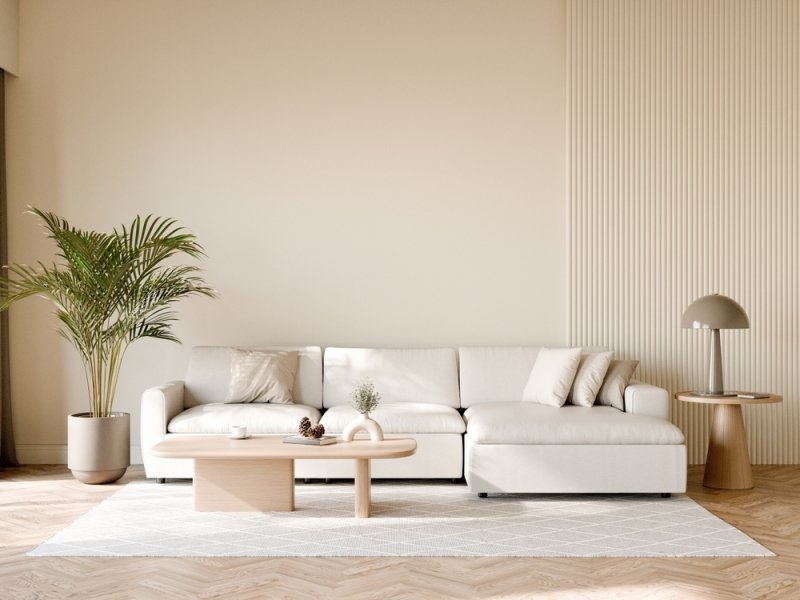
Among all the pieces of furniture that you can have in a living room, sofas can be considered the most essential because they affect the appearance, feel, and functionality of the space. Given the variety of options from which you may choose—from loveseats to sectionals—it will be helpful to know what types of sofas there are.
The right choice will depend on your space, number of people, requirements for comfort, and the look of the interior you want to create.
The contemporary sofa collection comprises a broad range of sofa designs beyond the conventional three-seater couch. Differences between the types exist in relation to form, purpose, manufacturing process, and appearance. Some sofas emphasize conversations; others allow for relaxing, sleeping, or multi-functional use.
A standard sofa is an adaptable choice that suits many houses. Normally, it comes in two- or three-seater models that can be placed either along the wall or serve as a component in a bigger seating arrangement. Additionally, its simple footprint enables its combination with accent chairs and ottomans.
A sectional sofa consists of several seating sections put together in one seating formation. Popular combinations include L-shaped, U-shaped, chaise, and modular formations. A sectional sofa allows for abundant seating and the natural creation of a conversation space; however, its size should be considered properly.
A loveseat sofa is a small seating unit that is normally designed for two people. Due to its small dimensions, it works great when a big sofa takes over the room. Moreover, it may also be combined with another sofa or chairs.
A sleeper sofa is a couch that doubles up as a seat during the day and a sofa bed at night to accommodate guests. This can be especially useful where there is no separate guest bedroom. While selecting a sleeper sofa, consider not only its dimensions in the closed position but also its dimensions in an open position.
The recliner sofa comprises seats that recline backward to provide further relaxation. Both manual and motorized recliners are available, thus allowing their use for activities such as reading books or watching TV. Keep in mind that more clearance will be needed when reclining the seats.
A chaise sofa provides a space for stretching your legs without the need for a footrest. It can be part of a regular sofa or a sectional one. While offering a great place to lounge, this type of sofa needs careful positioning due to the increased dimensions of its extended seat.
The Chesterfield sofa is typically made with deep buttoning and rolled arms in addition to its bulky form. Modern versions can have other proportions, fabrics, and colors but still maintain elements of classic design. It can work particularly well as a statement piece in traditional, transitional, or eclectic interiors.
More than mere configuration, the style of the sofa will dictate its relationship with other parts of the room. Some common styles include contemporary, mid-century revival, traditional, and deep-seat varieties.
Contemporary sofas may incorporate clean lines, understated details, low heights, or geometric shapes. Contemporary furniture does not necessarily have to be hard; it could also feature curves, comfortable cushions, and fabric choices.
In looking at sofa design types in contemporary homes, it is important to look at the whole style rather than merely the color. This includes arm width, leg design, cushioning shape, back height, and depth of the seat.
With small living spaces, proportion and circulation should be the focus. There could be enough room left for a coffee table and pathways using a smaller sofa or loveseat. Thin arms could offer additional seating without taking up extra width, and high legs could make the furniture appear light.
It is important to measure doorways, staircases, hallways, and elevators prior to ordering. It can be hard to bring a sofa that perfectly matches the floor plan through a narrow entrance.
When choosing types of sofas for large living rooms, the difficulty lies in furnishing the space without creating a sense of detachment. Sectionals can act as an anchor to a seating area, while two sofas positioned facing one another can create a more formal conversational setup.
In open-plan homes, it could be necessary to use furniture to differentiate between living and dining or kitchen areas. In this case, sectionals could come in handy because of their form.
The right choice of sofa comes through functionality rather than aesthetics. Factors that should be taken into account include the users of the sofa, the number of people who would be using it, the necessity of sleeping space for guests, and the intended purpose of the room in terms of socializing, entertainment, or rest.
Comfort is determined by the height and depth of the seats, the angle of the back, and the softness of the cushion. The depth of the seats may determine whether a sofa will facilitate upright sitting or reclining, which means that people of various heights may prefer sofas of different types.
Construction is another important issue. Solid structure of the furniture, proper design of the seats, and good-quality upholstery may be more essential than any other element.
A good-looking sofa is not necessarily the best one. These aspects need to be considered before deciding on a specific option:
All these aspects might help avoid purchasing a beautiful yet troublesome sofa.
Must Read: Best Furniture Materials to Have Long-Lasting Home Furniture
Selecting the right type of sofa from a variety of options becomes easy when one starts with the measurements of the room where the sofa is to be placed and other factors such as comfort and style. This will make it easy to choose the most suitable sofa for the room.
There is no set design that is ideal for every living room. The standard sofa is flexible, the sectional can offer a lot of seating area at once, the loveseat is perfect for small rooms, and the sleeper can accommodate guests. Room size, family size, design, and how the sofa will be used daily can determine the right choice and not simply its look.
A design that lets people talk face to face is best. Based on the room, it could mean that a sofa comes with chairs, two sofas facing each other, or a sectional placed around a center table. Adequate walking space needs to be available for people to walk around the seating.
They do not necessarily have to be. Deep seating can work great for relaxation purposes but not for shorter people since it makes them sit in an awkward position. They should consider the seat depth, seat height, and back angle. When many people will be using the sofa, testing can come in handy.
The sofa does not have to blend perfectly with all other furniture items. It may be enough if the furniture items in the room are of the same size, material, color, and visual weight. Even combining contrasting furniture styles will add more complexity to the room than making it similar to a set of matched furniture.
The specific amount of clearance depends on the room and the furniture layout. However, the primary requirement for the sofa is uninterrupted movement around it. Do not place the sofa where doors, drawers, corridors, and reclining mechanisms are blocked by it. Before purchasing, try to mark the space taken up by the sofa using tape.
This content was created by AI